
Vitamin is a chemical substance that human body requires continually in small amounts as it does not synthesize a vitamin. There are various types of vitamins, Vitamin D being one of them.
Vitamin D is fat-soluble vitamin which plays hormone-like role in the body. What is unique about vitamin D is that our skin can produce vitamin D from cholesterol molecules under ideal circumstances (please see the article on Light). Thus, in an environment where skin gets sufficient sunlight exposure, indigenous vitamin D production would suffice. However, the major problem arises when such circumstances are compromised by factors such as migration from high solar radiation area to a lesser, of darker skin background, continual body coverage, being housebound and other medical conditions.
Currently available scientific data indicates that vitamin D plays a role in muscle and bone development as well as immune system. Its deficiency is reported to be linked to depression, autism, type 1 diabetes, Syndrome X, muscle and bone pain, Rickets and fits.
Therefore, reducing the risk of vitamin D deficiency among at-risk patients is a paramount task. Body vitamin D stores can be enhanced by consuming vitamin D rich foods such as milk, fish, egg, mushroom etc and also by optimising sun exposure. Additionally, it is highly advisable to be vigilant about the symptoms of vitamin D deficiency and seek help promptly by contacting a GP.
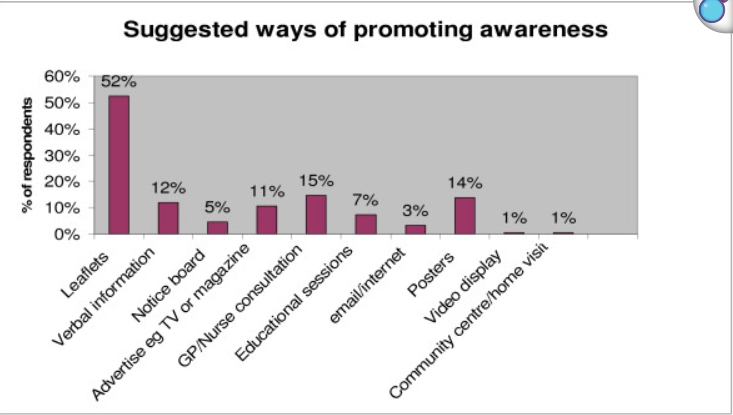
The study we conducted into assessing the awareness of vitamin D deficiency among at-risk people in the North West of the UK revealed that –
- 28% of them (n = 61) had never heard about vitamin D
- Older patients (p = 0.003) were less likely to have heard about vitamin D
- 54% of participants were unaware of the commonest symptoms of vitamin D deficiency
- 34% did not expose their skin other than their face in the last one year
- 11% did not include vitamin D rich foods in their diet
Hence, I encourage you to promote awareness about vitamin D among family and friends especially elderly members of the society so as to avoid the dire consequences of newly rising incidence of childhood as well as adult vitamin D deficiency.
For those of you interested in the report of the study, more information is available online where our study is published on the BMC Research Notes and can be accessed on http://www.biomedcentral.com/1756-0500/5/17/abstract. Alternatively, it can be accessed from the Google, PubMed or Medline: title – ‘Awareness of vitamin D deficiency among at-risk patients.’
Illuminated
The original article was published on blogspot.com in 2011.
EA

