
Getting through medical training in the UK
EA
For those who are keen to start studying medicine but wondering how to do it or where to start, the information below is deemed to be a springboard. This information is applicable to those who are categorised as matured students with non-conventional academic qualifications in the UK.
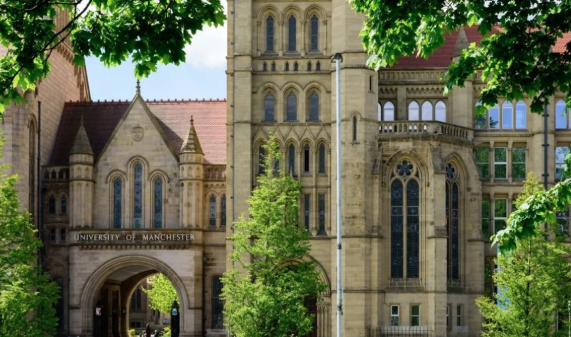
The first thing is to decide which course you need to do, for example – access to medicine, foundation in medicine or other locally recognised course as a route to a medical school. Although mature students can undertake any of these courses depending on their eligibility, the following guidance is regarding Access to Medicine Training. Thus, I think that the following points are salient steps in preparing for selection to medical school in the UK.
1. Obtain hands on experience in health care sector. This can be a paid job or voluntary. The longer the duration of the experience, the more favourable you become for selection. You need to continue to obtain substantial amount of experience in health care if not had already.
2. Prepare yourself for UKCAT.
3. Perform an online or face-to-face search on colleges which provide Access to Medicine course. Further more, check the names of the universities which recognise the access course provided by that specific college that you are interested in. There is a variation of interest among universities in relation to access course; hence, it is important to know the universities which recognise the course. You can directly phone universities, email or go in person (especially on Open Day) to find out the universities’ requirements.
4. Once you decide the college that you would like to study Access to Medicine, make an application well in time. This can be done online or on hard copy – check which option the college offers. And also, remember that the colleges have deadlines for applications, for example – the deadline for Access to Medicine course at The Manchester College is 31st May 2011 for the academic year commencing in September 2011. Nevertheless, if you have missed the deadline, you could still speak to them via telephone or go to the college in person and inquire about the possibility of making an application. There might still be some places available.
5. There will be an entrance exam (prognostic test) which includes questions from maths, chemistry, physics and biology. Besides, English grammar and literature assessment is included. This test is not difficult test. They use this mainly to assess the level of help that you need whilst you study at the college. Nevertheless, it needs some level of preparation such as brushing up your English grammar rules esp for foreign students.
6. Following prognostic test, you will be invited for an interview at the college. They might ask you questions about why medicine, why that particular college, what have you achieved so far, evidence of strong academic potential, what would you like to do in the future as well as background information that you mentioned in your application form.
7. Now the next step is to accept an offer from the college and make the necessary adjustments such as moving place or sorting out family responsibilities – if you have young children, for example. You need to make sure that you are ready to put the best of your effort into the academic year. You need to be focused. There are a lot of tasks expected from you to achieve in the year.
8. In addition to focus on your study in relation to the course, you should start compiling together your personal statement for medical school application. You can ask for help from the college support team, tutors (if they have time), friends and families in terms of editing your personal statement. You should aim to finalise your personal statement by the end of September. Your application form should be dully completed well before the deadline in October.
9. If English is not your first language, you would rather start planning to do IELTS (International English Language Testing System) exam early. The universities require, generally, an overall result of 7 to 7.5. The University of Manchester required IELTS result with an overall of 7.5, not less than 7 in each section. Please check the requirement of each university that you are interested in applying. The IELTS requirements along with other specifications are available on the universities’ website. If you do not obtain the result you wanted at the first sitting, you can resit the exam fairly quick. Hence, if you start doing IELTS early, you would have a chance to redo it in the year or your result would be at hand by the time when the universities offer you a place.
10. Then through out the year concentrate on getting excellent results on your course. There is a lot of support available from tutors at the college; hence, make use of that. It is totally possible to achieve the result that the universities seek whatever academic background you have.
11. When you receive a date of interview, make sure you practice some interview techniques with your tutors at the college or in any other setting prior to attending it. It is advisable to rehearse impactful wording.
12. During the interview, be yourself, throw in the best of you and remain calm. The interview panel, for example at Manchester University were five interviewers slightly daunting but completely humane. They understand you; try your best to answer their questions. If you like to have an idea of previously asked questions during the interview, you could try to google and see if there is any information posted online from previous candidates.
I hope that having done this, you would succeed in getting a place at your favourite medical school. Enjoy medicine. Work hard. Play hard.
Additionally, for those of you considering any other discipline, the information here can be translated and applied to that particular context. All the best!
Illuminated
12.08.2019
When preparing to join a UK college to study access to medicine course, make sure the following –
1. Know which uni will consider you for interview and be aware of their criteria. They might not interview all access students. There will be criteria in addition to your result in the course.
2. Speak to the college tutors and collect a list of uniS which accepted students from that course.
3. Have a list of preferred uniS where you will apply
4. Just to remind you also that you need to start preparing your personal statement for UCAS which needs to be tailored to the uniS that you wish to apply for.
5. However, without the involvement of a uni to consider you for interview when you meet the appropriate entry criteria, doing access course is risky.
6. Therefore, find access students from previous years in your college and talk to them – both who did and didn’t succeed. Identify the likelihood of getting admission, the strengths as well as the weaknesses of the course.
7. On the other hand, be aware of alternatives such as doing pharmacy etc and then going to medicine.
8. Moreover, other options like physician assistant, consultant nurse, consultant radiographer etc pathways exist.
9. Determination is all that is needed. Always calculate and re-calculate options if any hesitation exists. Otherwise, march forwards.
10. These are my views for your info only. Talk to others as well. Hopefully, you will hear something that rhymes with you and grab it.
Have a good day.
The above articles were initially published on blogspot.com in 2019.
EA

